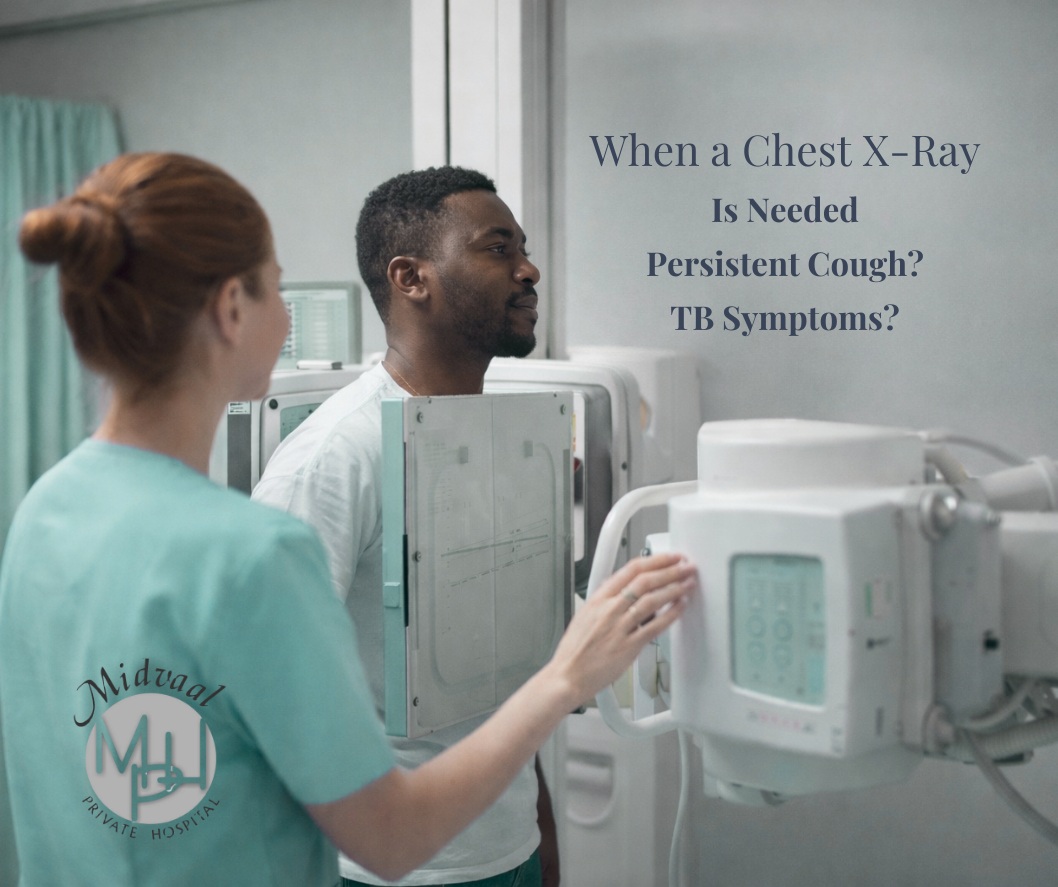
When a Chest X-Ray Is Necessary (And Why It Matters)
When a cough lingers or symptoms like night sweats, weight loss, or chest pain appear, one of the most important diagnostic tools doctors may recommend is a chest X-ray.
In South Africa — where tuberculosis (TB) remains common — a chest X-ray plays a key role in helping clinicians detect lung abnormalities early and guide further testing.
At Midvaal Hospital, chest X-rays are not done routinely for every cough. Instead, they are recommended when certain red-flag symptoms or risk factors are present. Understanding when imaging is necessary can help you seek care sooner and avoid delays in diagnosis.
What Is a Chest X-Ray?
A chest X-ray is a quick, painless imaging test that creates pictures of:
The lungs
Airways
Heart
Ribs and chest structures
It helps doctors see signs of infection, inflammation, fluid, or other abnormalities that can’t be detected through a physical exam alone.
When Is a Chest X-Ray Necessary?
A doctor may recommend a chest X-ray if you have a persistent cough (2 weeks or longer) — especially when it’s combined with any of the following:
Night sweats
Unexplained weight loss
Fever or chills
Chest pain
Shortness of breath
Coughing up blood
Recurrent chest infections
Abnormal lung sounds on examination
These symptoms can indicate TB, pneumonia, or other lung conditions that require visible imaging to confirm or rule out.
Chest X-Ray and TB Screening
A chest X-ray is often used as part of the TB evaluation process. While it cannot confirm TB on its own, it can show patterns that suggest infection, such as:
Lung infiltrates
Cavities
Scarring
Fluid around the lungs
If these findings are present, doctors will usually recommend TB sputum testing or other laboratory investigations to confirm the diagnosis.
Other Reasons You Might Need a Chest X-Ray
Chest X-rays are also used to investigate:
Pneumonia and bronchitis
Chronic cough causes
Lung masses or nodules
Fluid buildup (pleural effusion)
Heart enlargement
Trauma or rib injury
Occupational lung disease
This makes it one of the most valuable first-line imaging tools in respiratory care.
What Happens During the Procedure?
A chest X-ray is simple and quick:
- You’ll stand or sit against the imaging plate
- The radiographer will position you and ask you to hold your breath briefly
- The image is taken in seconds
The process is painless and typically completed within minutes.
Is a Chest X-Ray Safe?
Yes. Chest X-rays use a very low dose of radiation, and the benefits of diagnosing a serious condition far outweigh the minimal risk.
Special precautions may be taken if you are pregnant or could be pregnant — always inform the healthcare team beforehand.
When Should You Ask About a Chest X-Ray?
You should speak to a healthcare provider if you have:
A cough lasting 2 weeks or longer
Night sweats or weight loss
Persistent fever
Ongoing shortness of breath
Chest discomfort that doesn’t improve
A history of TB exposure
Early imaging can shorten the time to diagnosis and treatment — especially important for TB and serious lung infections.
Midvaal Hospital: Early Imaging, Better Outcomes
If you’re experiencing persistent cough symptoms or TB red flags, Midvaal Hospital can guide you through the right next steps — including clinical assessment and imaging if needed.
A chest X-ray helps clinicians move from uncertainty to clarity, ensuring you receive the correct treatment as early as possible.
FAQs
1) Can a chest X-ray detect TB?
A chest X-ray can show signs suggestive of TB, but laboratory tests are needed to confirm the diagnosis.
2) Should I get a chest X-ray for any cough?
Not always. It’s usually recommended when a cough persists for 2 weeks or more or when red-flag symptoms are present.
3) How long does a chest X-ray take?
The procedure itself usually takes only a few minutes.
4) Is radiation from a chest X-ray dangerous?
The radiation dose is very low, and the test is considered safe when clinically indicated.
Read more about;
Midvaal Private Hospital
Best Private Hospital – Vaal Triangle